
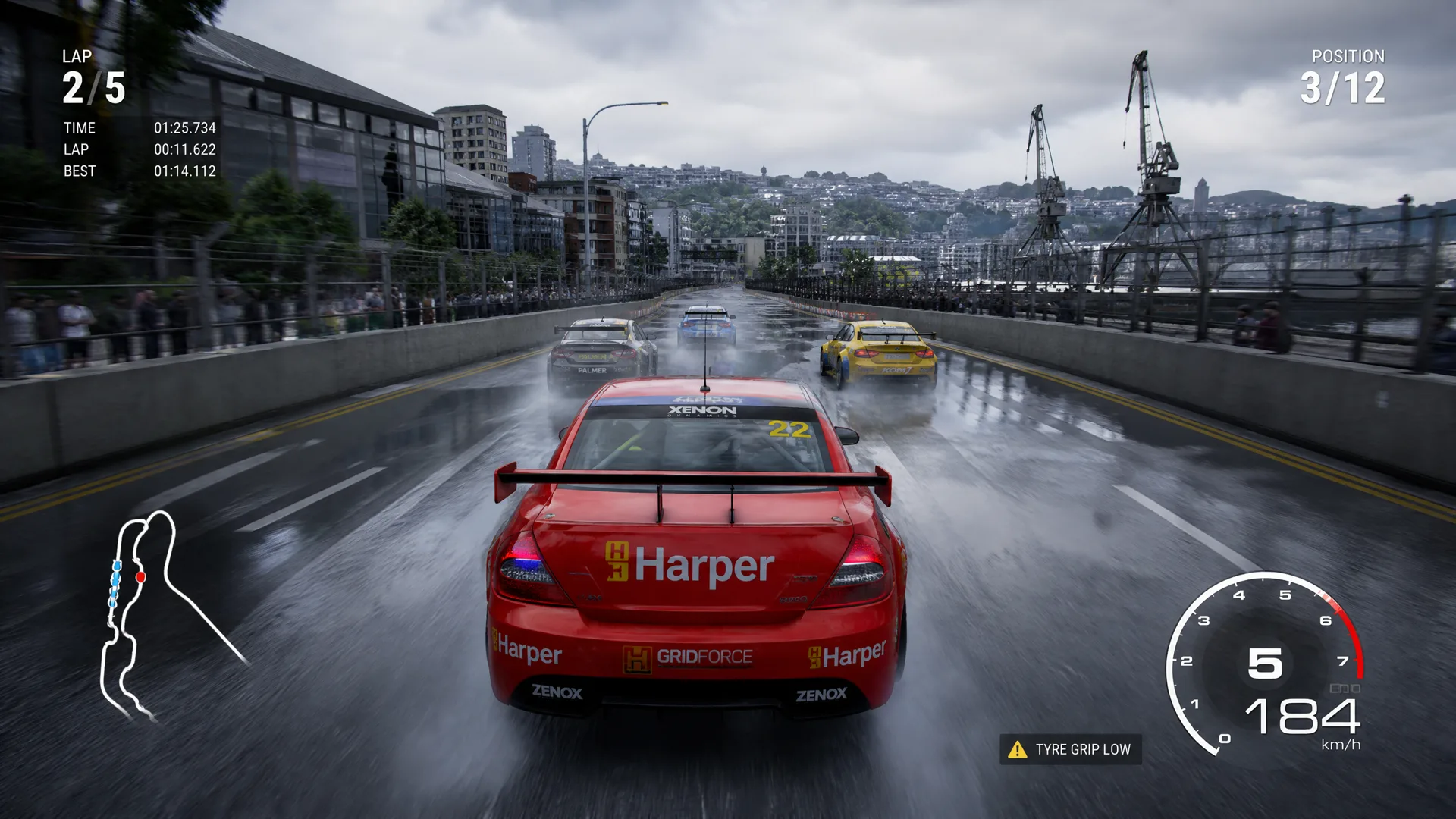
The Roar of the Coastal Storm
There is a distinct kind of tension that settles over the starting grid when the skies above the Tasman Sea decide to open up. In Southern Cross Speedway, the latest modern touring-car racing simulation from the fictional Auckland-based studio Kauri Dynamics, this tension is not merely a visual set dressing but a core gameplay pillar. Set against the breathtaking, rain-slicked coastal circuits of New Zealand, the game challenges players to master the delicate balance between aggressive speed and the unforgiving reality of wet-weather motorsport.
The premise is straightforward but flawlessly executed: you are thrust into the fiercely competitive world of regional touring-car championships, where the cars are heavy, the horsepower is immense, and the margins for error are virtually non-existent. Kauri Dynamics has crafted a handling model that feels weighty and authentic, perfectly capturing the inertia of these steel beasts as they careen through tight hairpins and sweeping coastal straights. When the rain begins to fall, the coastal tracks transform from familiar tarmac ribbons into treacherous gauntlets where every input must be measured and deliberate.
Mastering Tyre Temperature
At the heart of the driving experience is an intricate tyre temperature simulation that governs almost every aspect of your vehicle's grip and stability. In dry conditions, getting the slick tyres into their optimal operating window is a relatively straightforward affair. However, when the heavens open and the track temperature plummets, managing tyre heat becomes a complex, ongoing puzzle that can make or break your entire race weekend.
The game forces you to constantly evaluate the state of your rubber. Push too hard on a drying line, and your wet-weather tyres will quickly overheat, blistering and losing their structural integrity. Conversely, if you tiptoe too cautiously through the flooded sections, the tyres will cool down dramatically, turning your high-performance touring car into a heavy, unmanageable sledge. The feedback provided through the steering column is exceptional, communicating the subtle shifts in grip as the tyre temperatures fluctuate throughout a stint.
Aquaplaning and the Shifting Racing Line
Perhaps the most terrifying and brilliantly realised hazard in Southern Cross Speedway is the ever-present threat of aquaplaning. As the rain intensifies, water pools dynamically on the track surface, often accumulating in the most inconvenient places—at the apex of high-speed corners or right in the middle of heavy braking zones. Hitting a deep puddle at speed causes the steering to go momentarily light, accompanied by a sickening lack of resistance as the tyres lose contact with the tarmac and skim across the water's surface.
To combat this, the game introduces a highly dynamic visible racing line that evolves organically as the weather changes. Unlike the static racing lines found in more arcade-focused titles, the optimal path through a corner in Southern Cross Speedway shifts dramatically depending on the rainfall and the amount of standing water. The traditional dry line, heavily rubbered in from previous sessions, becomes perilously slick when wet, forcing drivers to seek out alternative, wider lines to find mechanical grip on the rougher, unrubbered sections of the asphalt.
Co-Driver Weather Calls and Strategy
Because the weather conditions on the New Zealand coast can change with brutal suddenness, you are not left to navigate the storms entirely alone. Kauri Dynamics has implemented a fantastic co-driver mechanic, where your race engineer provides real-time, highly accurate weather calls over the radio. These calls are not just flavour text; they are critical pieces of strategic intelligence that dictate your pit stop strategy and tyre choices.
The engineer will relay information from the weather radar, warning you of incoming squalls or predicting when a heavy downpour is likely to ease off. This forces you to make agonising strategic decisions on the fly. Do you pit immediately for extreme wet tyres and risk losing track position, or do you try to survive on standard wets for three more laps until the rain subsides? The radio chatter is delivered with a brilliant, deadpan Kiwi delivery that adds a wonderful layer of authenticity to the pit wall communications.
The Brutal Reality of Damage
Touring-car racing is notoriously physical, often described as a contact sport at two hundred kilometres per hour, and Southern Cross Speedway models this aggressive reality with a punishing damage system. Trading paint is an inevitable part of fighting for position in the tight, twisting coastal circuits, but the game demands that you understand the difference between a tactical nudge and a reckless collision. The physical and mechanical consequences of poor racecraft are severe and immediate.
Aerodynamic damage is particularly impactful. Losing a front splitter or damaging a rear wing significantly alters the aerodynamic balance of the car, reducing downforce and making the vehicle incredibly unstable through high-speed sections. In the wet, where mechanical grip is already compromised, aerodynamic deficiencies are magnified tenfold. A damaged car requires an entirely different driving style to nurse home, forcing you to brake earlier and accelerate more gently to avoid spinning out.
The Crucial Qualifying Grind
Given the difficulty of overtaking in wet conditions and the severe penalties for contact, track position is everything in Southern Cross Speedway. This elevates the importance of the qualifying sessions, transforming them from a mere prelude into some of the most intense and nerve-wracking moments of the entire race weekend. Securing a spot at the front of the grid is often the difference between a podium finish and a miserable afternoon spent battling in the midfield spray.
Qualifying is a pure test of pace and precision. You are given a limited window to set your fastest lap, and you must carefully manage your tyre allocation and fuel load to ensure your car is in optimal condition for that one flying lap. The dynamic weather system often plays havoc with qualifying strategies; a sudden downpour halfway through a session can lock in the grid order, punishing those who waited too long in the garage hoping for better track conditions.
Fair and Nuanced Controller Assists
Simulation racing games often struggle to balance the experience between hardcore players using expensive wheel setups and those using standard gamepads. Southern Cross Speedway tackles this issue head-on with a suite of highly refined, fair controller assists that make the game accessible without diluting the core simulation experience. The developers have clearly spent a significant amount of time ensuring that gamepad users can remain competitive.
The assists are granular and highly customisable, allowing players to tailor the experience to their skill level. Key features include:
- Speed-sensitive steering dampening to prevent twitchy inputs on the analog sticks.
- Dynamic traction control that intervenes smoothly without aggressively cutting engine power.
- An intelligent anti-lock braking system that allows for trail braking on a controller trigger.
- Visual cues for tyre slip angle to compensate for the lack of force-feedback through a wheel rim.
Wet Lines, Clear Decisions
Southern Cross Speedway is a masterclass in focused, atmospheric motorsport simulation. By narrowing its scope to the specific, grueling discipline of modern touring-car racing on wet coastal circuits, Kauri Dynamics has delivered an experience that feels incredibly cohesive and deeply rewarding. It is a game that does not coddle the player, demanding concentration, strategic foresight, and a healthy respect for the terrifying reality of aquaplaning at high speeds.