
The Storm Approaches
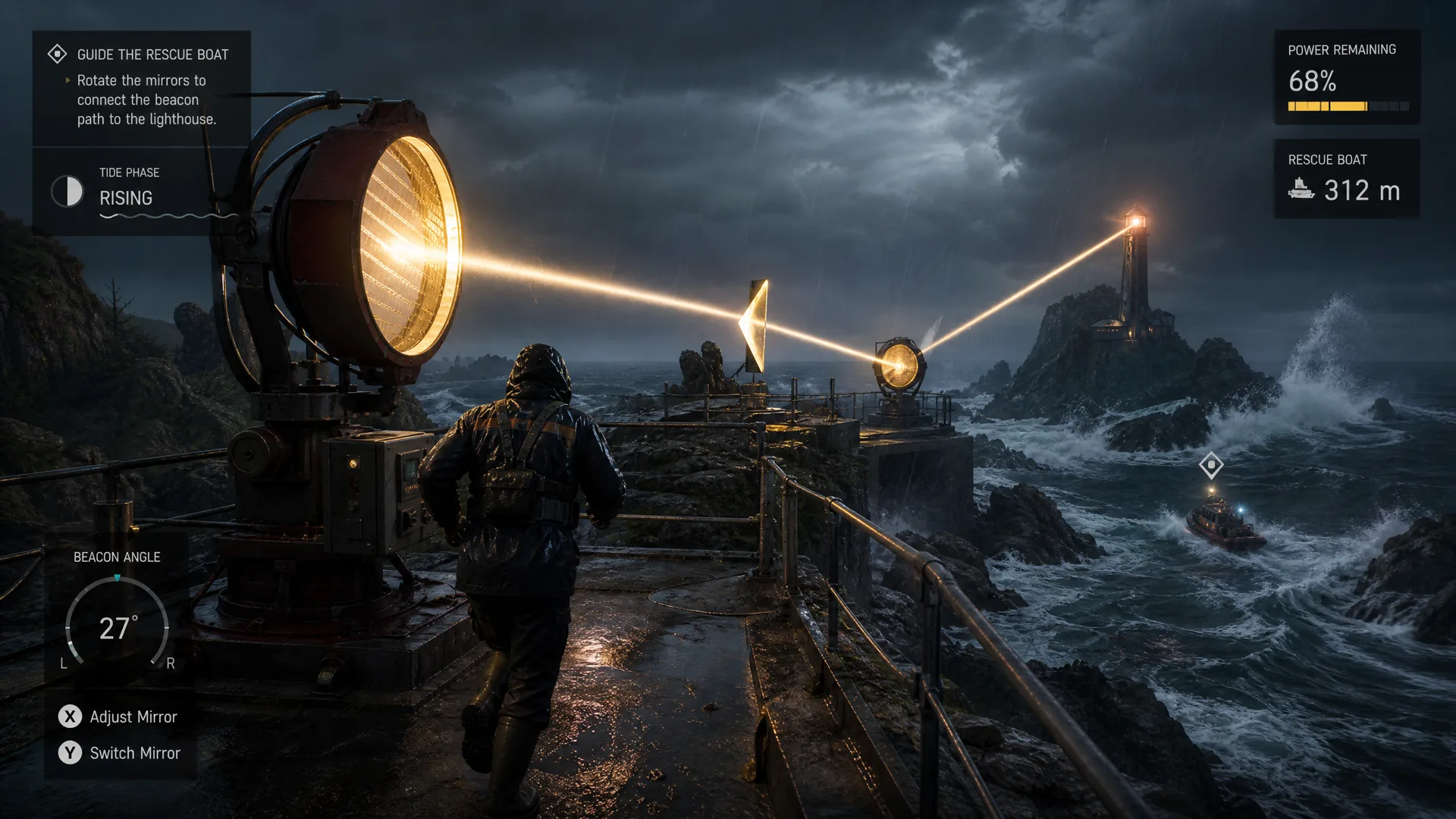
The opening moments of Tidal Beacon are masterfully understated, lulling you into a false sense of security before the tempest truly breaks. Developed by the fictional Wellington-based studio Iron Coast Interactive, this first-person maintenance-puzzle game places you in the rubber boots of a solitary lighthouse keeper on a remote, jagged outcrop. As the sky darkens to a bruised purple and the first heavy drops of rain lash against the reinforced glass of the lantern room, the sheer isolation of your assignment becomes palpably clear. You are simply a custodian tasked with keeping the light alive while the ocean attempts to tear your sanctuary apart.
What begins as a routine shift of polishing brass rapidly escalates into a frantic, high-stakes battle against the elements. The game excels at building tension through its atmosphere, using the relentless howling of the wind and the shuddering of the stone tower to constantly remind you of the danger outside. It is a brilliant subversion of the typical puzzle genre, marrying methodical problem-solving with the panicked urgency of a survival horror experience.
Keeping the Heart Beating
At the core of Tidal Beacon's gameplay loop is the intricate management of power flow and generator fuel. The lighthouse is powered by a temperamental, ageing diesel generator located in the damp, claustrophobic basement. Players must physically haul heavy jerrycans of fuel down the spiralling wrought-iron staircase, a task that becomes increasingly perilous as the tower shifts and groans. The fuel consumption rate is dynamically tied to how many electrical subsystems you have active at any given time.
The power routing system is presented as a series of tactile, satisfyingly clunky fuse boxes and switchboards. Rerouting power to bypass damaged circuits requires you to physically trace the heavy rubber cables along the stone walls, often while knee-deep in freezing seawater. It is a system that demands spatial awareness and a solid understanding of the lighthouse's layout. When a sudden power surge blows a vital relay, you must scramble to find a replacement before the backup batteries drain completely.
Focusing the Beam
While the generator provides the lifeblood of the lighthouse, the optical lens assembly is its soul. The game's most intricate puzzles revolve around the delicate alignment of the massive Fresnel lens in the lantern room. The storm frequently knocks the delicate prisms out of alignment, requiring you to carefully recalibrate the optics using a series of brass hand-cranks and counterweights. You must learn to time your adjustments with the rhythm of the storm.
The effectiveness of your alignment directly impacts the visibility at sea, which is represented by a dynamic UI element that shows the beam's penetration through the fog and rain. If the lens is misaligned, the light scatters uselessly into the mist, and the distant, mournful blasts of ship horns warn you of impending disaster. To achieve optimal focus, players must consult weathered technical manuals scattered around the keeper's quarters.
Against the Rising Tide
The ocean in Tidal Beacon actively seeks a way inside. Flooding is a constant, terrifying threat that forces you to constantly re-evaluate your priorities. A shattered window on the lower levels or a breached sea door can quickly lead to rising water levels, which not only slows your movement but also threatens to short out the vital electrical systems you have worked so hard to repair. You must use heavy wooden planks, sandbags, and a rudimentary hand-pump to keep the ocean at bay.
Timed repairs add a layer of sheer panic to the methodical puzzle-solving. When a breach occurs, a harsh alarm bell rings out, and you have only minutes to patch the hole before the water reaches the generator. These sequences are incredibly stressful, requiring you to sprint down the narrow stairs while the water level visibly rises around your shins. The game cleverly uses the rising water to alter the level design dynamically, cutting off familiar routes.
The Right Spanner for the Job
Your ability to survive the night relies heavily on your tool choice and inventory management. The keeper's toolbelt has limited slots, meaning you cannot carry every wrench, screwdriver, and roll of duct tape with you at all times. Before leaving the relative safety of the workshop, you must assess the damage reports on the central console and anticipate what tools you will need for the repairs. Taking the wrong spanner up five flights of stairs is a punishing mistake.
The game features a diverse array of authentic-feeling tools, each with specific uses and limitations. A heavy sledgehammer is great for forcing open jammed blast doors, but useless for delicate circuit board repairs. To succeed, players must internalise the function of each tool and develop a systematic approach to maintenance. Here are a few essential items you will constantly rely on:
- The multi-meter for diagnosing electrical faults and tracing dead wires.
- The heavy-duty pipe wrench for sealing pressurised steam valves and fixing leaks.
- The hand-cranked torch, essential for navigating the stairwell during total power failures.
- Industrial sealant for temporarily patching cracked glass in the lantern room.
A Symphony of Roaring Seas
Visually and aurally, Tidal Beacon is a staggering achievement. The presentation is designed to make you feel small and vulnerable in the face of nature's fury. The lighting engine is particularly impressive, contrasting the warm, flickering glow of your oil lamps with the harsh, cold flashes of lightning that illuminate the churning sea outside. The textures of the lighthouse interior are rendered with meticulous detail.
However, it is the sound design that truly steals the show. The audio landscape is a relentless, deafening cacophony of roaring wind, crashing waves, and the unsettling groans of the stressed architecture. The developers have recorded a vast array of distinct Foley sounds for every action, from the heavy thud of your boots on the metal grating to the satisfying click of a fuse sliding into place. The dynamic audio mix prioritises the most immediate threats.
Final Verdict
Tidal Beacon is a triumphant exploration of isolation, duty, and mechanical problem-solving. It takes the seemingly mundane premise of lighthouse maintenance and transforms it into a gripping, high-stakes thriller. The brilliant integration of the core systems—power flow, lens alignment, and flooding—creates a gameplay loop that is constantly engaging and mentally demanding. You are always one blown fuse or shattered window away from disaster, and the resulting tension is incredibly potent.
Iron Coast Interactive has crafted an experience that is as atmospheric as it is challenging. The game does not hold your hand; it expects you to learn its systems, respect its hazards, and think logically under extreme pressure. The physical, tactile nature of the repairs and the punishing consequences of failure make every successful shift feel like a monumental achievement. It is a game that respects the player's intelligence and rewards careful planning and quick reflexes in equal measure.